
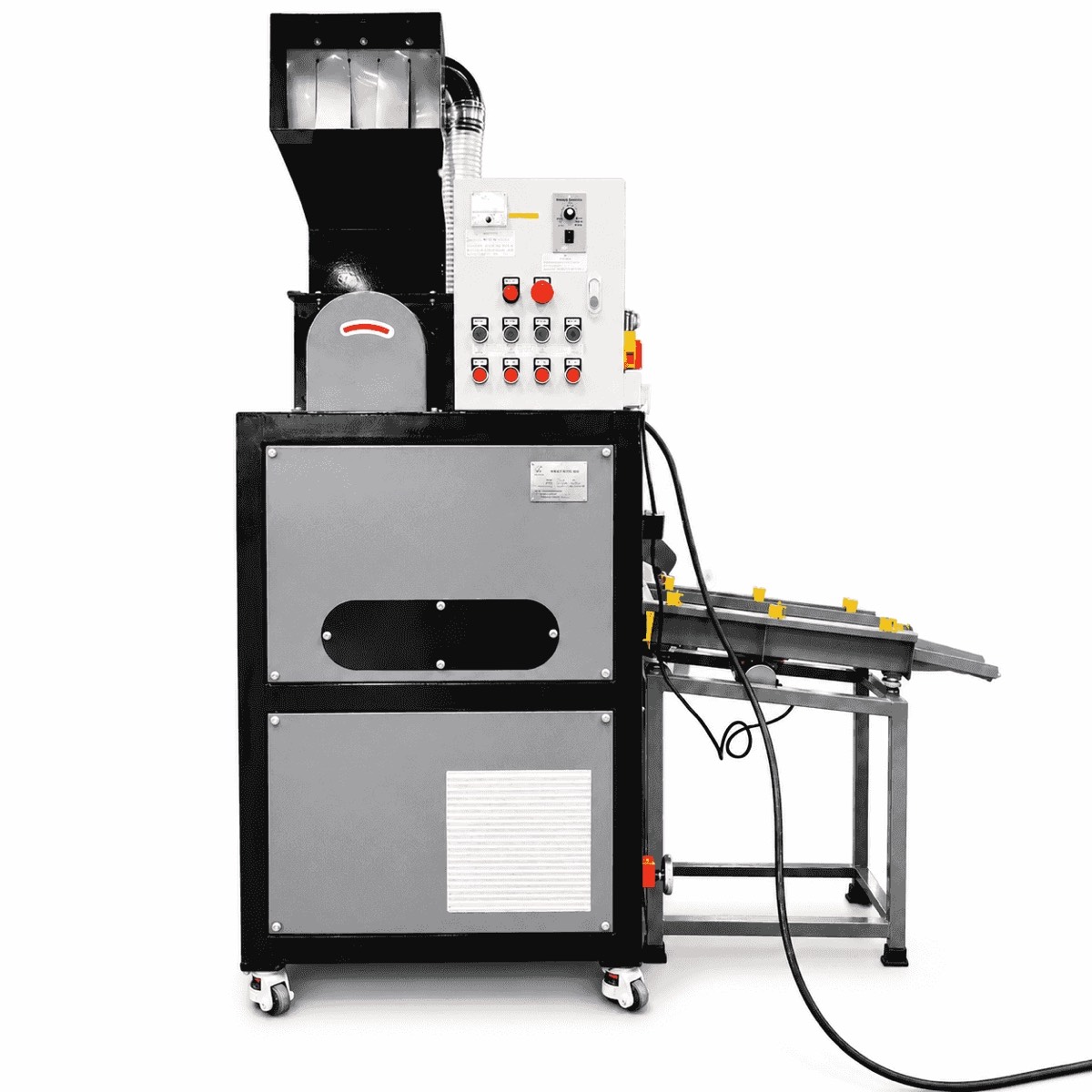
Describe the cable you actually receive
Choosing a copper wire granulator starts with the material in your yard. Household wiring, communication cable, automotive harnesses and mixed industrial cable can place different demands on preparation and separation. Send photographs of a representative load, including the difficult material you expect to process regularly.
Record the cable diameter range and describe connectors, plugs, steel parts, aluminum conductors, moisture or oil where present. Ask whether these materials can enter the proposed configuration or need preparation first. A machine selected from photographs of clean cable should not be assumed to handle a more contaminated load in the same way.
Compare stripping and granulation against the feed
For long, consistent cable, ask whether stripping would preserve the conductor in a form that suits your buyer. For mixed, fine or tangled wire, discuss granulation and separation. The useful comparison is how each process handles your feed, including preparation, operator time and the form of the recovered material.
Dry granulation reduces insulated wire to smaller particles and separates copper from plastic. Before choosing this route, ask what material must be removed, how the cable should be prepared and whether a sample run is needed. Keep unusual or difficult cable separate in the discussion so its requirements are not lost inside an average description.
Keep capacity attached to the configuration and conditions
State how much insulated cable arrives over your working period, how regularly it arrives and how much time is available for processing. Separate this target from the amount of recovered copper you expect to sell. An incoming-feed rate and a recovered-metal rate describe different quantities.
Compare the specification for the proposed configuration, rather than taking the largest figure from a product family. Ask what cable mix, preparation and operating conditions support the quoted capacity, and what happens when feed becomes finer, more variable or less clean. Include time needed for sorting, feeding, cleaning and changing material in your operating plan.
Evaluate the copper, plastic and remaining fractions
Clean-looking copper is useful evidence, but it is not the whole test. Agree how the finished copper will be checked, where the plastic and fines will go, and how material left in the other fractions will be assessed.
Purity and recovery answer different questions. Purity concerns the composition of the recovered copper fraction; recovery concerns how much of the copper in the feed is retained. Ask for results tied to the sample and configuration being discussed, and clarify whether an additional separation stage is included. A result from another material should not become an unconditional promise for your cable.
Confirm the power supply and workshop requirements
Tell the supplier the available voltage, phase and frequency. A voltage label does not by itself define the supply capacity needed for the complete machine and its auxiliaries. Ask for the electrical requirements of the proposed configuration and distinguish the main drive rating from the total equipment load.
Allow room for incoming material, feeding, discharge, collection and maintenance access, rather than considering only the machine footprint. Discuss dust collection, the position of collection points and the work needed at the site. Confirm these requirements before choosing where the equipment will stand.
Compare quotations as complete operating setups
Ask what is included in feeding, crushing, separation, controls and dust collection. Identify optional equipment separately, together with wear parts, operating instructions and the proposed support for startup. Compare these scopes alongside the machine price.
A useful inquiry includes material photographs, cable sizes and condition, expected processing volume, available power and the form of output required. Add the site location and any existing equipment. Use the reply to confirm the proposed model or configuration, its feed limits and the information still needed for selection.
Before you decide
Can I choose a granulator only by its hourly capacity?
No. Match the capacity to the cable mix, feed preparation, proposed configuration and working conditions. Also confirm whether the figure refers to incoming insulated cable or recovered copper.
Does the same setting suit every type of waste cable?
Do not assume it does. Describe the cable sizes, conductor types and contaminants, and ask what preparation or configuration changes are required. A representative sample is more useful than a general description of mixed wire.
Does high copper purity mean that no copper is lost?
No. Purity describes the recovered fraction, while recovery concerns the copper retained from the feed. Ask how both are assessed and how copper remaining in plastic, fines or other fractions is handled.
What should I send before requesting a quotation?
Send photographs, cable diameter and condition, expected processing volume, available voltage and phase, output requirements and the site location. Mention existing equipment and any material that is difficult to process.
Equipment references
Product information for the equipment discussed in this guide.