Name the fraction you want to recover
A request to separate metal from waste can describe several different jobs. One processor wants to remove ferrous pieces from an aluminum stream. Another wants to recover conductive non-ferrous fragments from plastics and other non-metallic material. These requirements should not be reduced to a single request for a metal separator.
Begin with the feed composition and the fractions you expect to collect. State whether the metal is already liberated as separate pieces or remains attached to other material. A separation stage should be discussed against the stream reaching that stage, not against the original object before dismantling or crushing.
Distinguish the two separation tasks
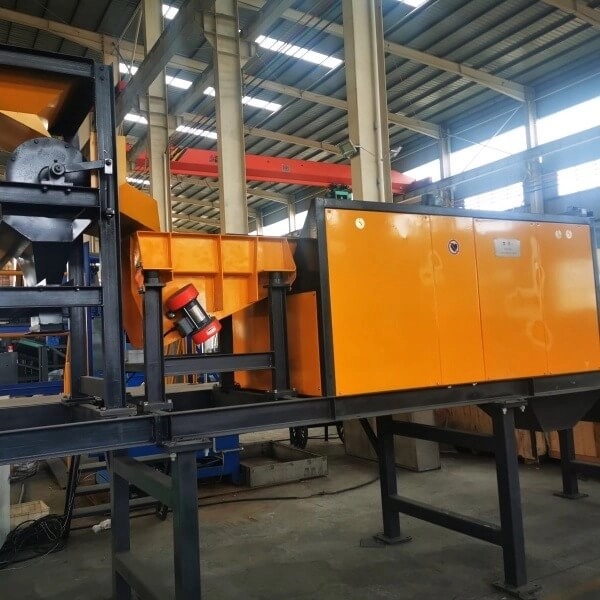
Magnetic separation targets material responding to a magnetic field, commonly the ferrous fraction in a scrap line. Eddy current separation uses the response of electrically conductive non-ferrous pieces to a changing magnetic field. The two methods therefore address different fractions and can appear at different points in a proposed process.
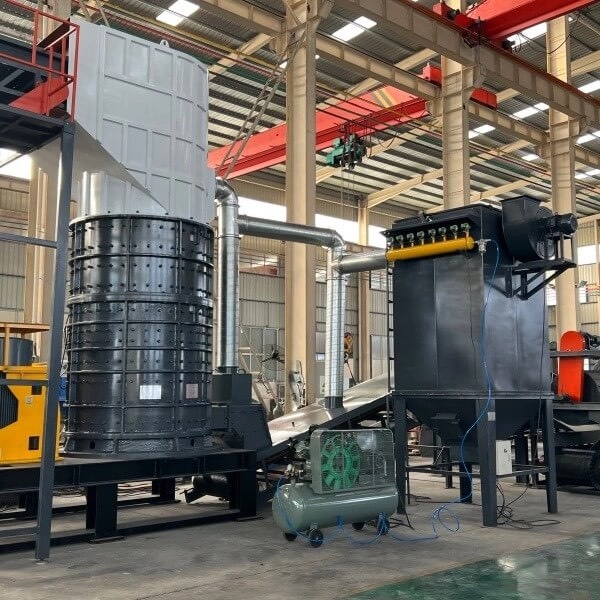
MIRACLE lists an ECS Series eddy current separator for non-ferrous sorting. Its VSC41600 can-processing listing also describes a process combining magnetic, air-density and eddy current stages. This illustrates a division of tasks; it does not mean every feed requires that complete arrangement or every module is included in a quotation.
| Stage or task | Intended distinction | Limit to discuss |
|---|---|---|
| Magnetic separation | Magnetically responsive material versus the remaining stream | Actual metals, attachments and material presentation |
| Eddy current separation | Conductive non-ferrous pieces versus non-conductive material | Particle condition, size distribution and target fraction |
| Screening | Larger and smaller size fractions | Size preparation, rather than identifying alloy grade |
Give the separator a defined feed
The condition of material entering the sorter is important. Provide photographs after the proposed size-reduction stage and describe its size distribution, shape and remaining attachments. Include fine material, unusually large pieces and variable loads. If the upstream machine has not been chosen, make that uncertainty explicit.
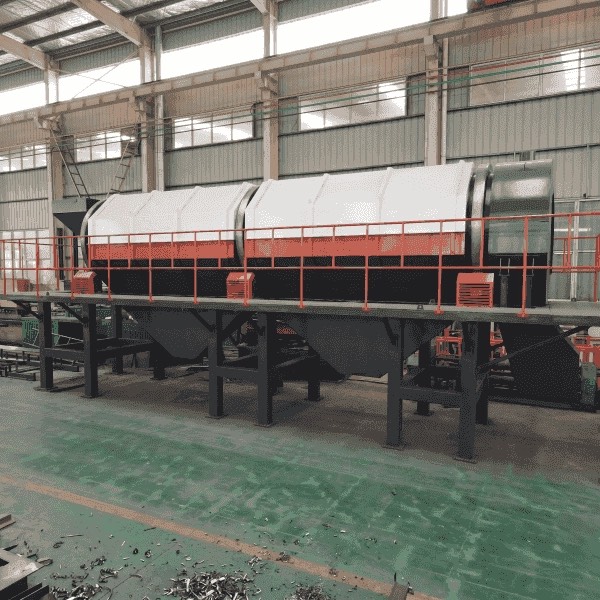
The GTS Series trommel screen is listed for classifying material into size fractions before downstream sorting. Discuss whether classification is needed for your stream and how each fraction would be handled. A screen separates by size; it should not be presented as a substitute for identifying the composition of recovered material.
Do not confuse metal recovery with alloy sorting
An eddy current stage can be discussed for recovering a conductive non-ferrous fraction from non-conductive material. That is different from producing individual aluminum, copper or alloy grades from a mixed metal fraction. Define the saleable product you actually need and ask what further identification or sorting would be required.
Likewise, an aluminum-rich output is not automatically a confirmed remelting feed or a customer-approved grade. Coatings, remaining attachments and other contaminants still need to be addressed in the process specification. Give the requirements of the next buyer or receiving process rather than relying on a broad label such as clean metal.
Assess output quality and retained metal separately
Purity and recovery answer different questions. Purity concerns the composition of the recovered fraction. Recovery concerns how much of the target material from the feed is retained in that fraction. A clean-looking bin alone does not show the target metal remaining in the other outputs.
Before relying on an evaluation, agree what material will be assessed, which outputs will be collected and how the results will be recorded. Ask to see both the recovered fraction and the residual material. Keep sample conditions attached to the findings; a result for one prepared stream is not an unconditional promise for mixed deliveries. Identify the point at which feed samples are collected, so results can be traced to that prepared stream.
- Describe each incoming material fraction and its variability.
- Identify the output bins and the purpose of each stage.
- Record feed preparation and the proposed size fractions.
- Assess the target product and the material left behind.
Define the equipment package and inquiry
A quotation should identify the selected separators, screening, feeding, conveyors, controls and collection arrangements where applicable. Clarify the connection points to existing equipment and the responsibilities for utilities, support structures and site work. Equipment appearing together in a diagram should be checked against the actual supplied list.
For a useful MIRACLE inquiry, send feed photographs, approximate composition, size information, expected volume and the required outputs. State which ferrous and non-ferrous fractions you need to recover and which non-metallic fractions remain. Include upstream equipment details so a proposal can explain the job of each stage instead of simply adding more machines.
Before you decide
Can an eddy current separator replace a magnetic separator?
Do not assume so. They address different material responses and target fractions. Define the ferrous-removal and non-ferrous-recovery tasks separately before selecting the process.
Does non-ferrous recovery produce separate alloy grades?
Not automatically. Recovering a conductive non-ferrous fraction is different from separating individual metals or alloys. Specify the required product composition and discuss any additional sorting.
Why ask about the material after crushing?
That is the stream the downstream equipment receives. Its particle sizes, shapes, attachments and variability help define the proposed preparation and separation duties.
Equipment references
Product information for the equipment discussed in this guide.