Define a metal-forming task
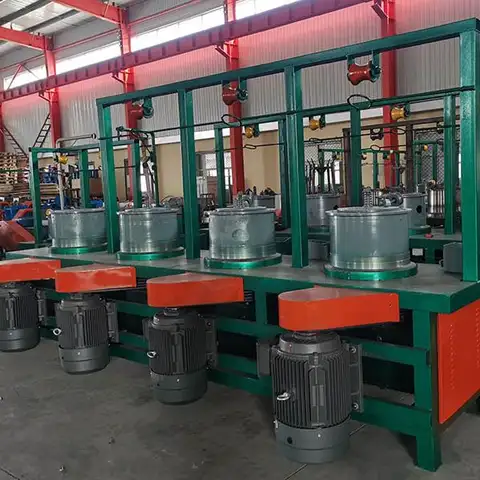
Wire drawing changes the metal section by pulling suitable wire or rod through a die. A powered drawing arrangement provides the traction, and successive stages can reduce the section further. The output is formed wire, not the bare conductor produced by cable stripping or the copper granules produced by recycling insulated cable.
This distinction determines the starting point of an inquiry. A drawing machine needs a defined metal feed and a required wire product. Our Wire Drawing Machine range is a project-configuration direction: material suitability, dimensional range and the complete supplied arrangement must be established for the application.
Put the incoming and finished wire on the same specification sheet
The starting diameter is only part of the feed description. Alloy or material grade, incoming condition and surface requirements also affect the proposed route. A feed identified only as copper or steel leaves important differences unresolved. Keep the material description attached to the dimensional reduction you require.
The finished-wire requirement should include its section, dimensional tolerance, surface condition and intended receiving process. Where a mechanical condition or further treatment is required, identify it explicitly. A machine selected only to reach a nominal diameter may not cover the complete product requirement.
| Stage | Information to define | Decision it supports |
|---|---|---|
| Incoming wire or rod | Material, dimensions, condition and supply package | Accepted feed and preparation boundary |
| Drawing | Starting-to-finished section and required product condition | Drawing stages, tooling and associated process scope |
| Finished wire | Receiving specification and package form | Inspection, take-up and downstream connection |
Choose the drawing arrangement for the material
Dies, drawing traction and the wire path work together. The proposal should explain how the required reduction is divided across the selected arrangement. Tooling and production claims from a different metal or dimensional range should not be substituted for this process definition.
A water-tank or wet-drawing description identifies a particular arrangement, not universal compatibility with every metal. Industrial equipment also uses other drawing layouts. Discuss the intended cooling and lubrication system for the material, and distinguish a complete supplied system from a connection that the site must provide. A water-related label does not mean any liquid supply is suitable.
Treat pay-off and take-up as production equipment
Pay-off presents the incoming stock to the drawing section; take-up collects the finished wire. Coil, spool or other package form affects those interfaces. A drawing section can be technically appropriate while its surrounding handling arrangement remains unsuitable for the material packages your plant receives or must deliver.
Describe incoming and outgoing packages with dimensions and handling requirements. Show how they will be loaded, changed and moved through the workshop. If annealing is required, identify where it belongs in the proposed route and whether it is included. Drawing, annealing and winding are related duties with separately defined equipment scope.
Compare output on a common operating basis
Line speed, finished-wire diameter and output mass describe different quantities. A speed figure does not establish the same mass output for different wire sections or materials. Likewise, a multiwire arrangement needs its simultaneous wire count identified before its output can be compared with a single-wire proposal.
Compare offers using the same material, starting dimension, final dimension and product requirement. Include changes of tooling or packages in the operating discussion. The relevant target is accepted finished wire over the available production period, supported by the defined feed and equipment configuration.
Use a short specification to connect the complete line
A useful project brief follows the wire from its incoming package to its finished destination. That allows the drawing section to be selected alongside its interfaces and makes omitted treatment or handling work visible.
- Identify the material, incoming condition and starting dimensions.
- State finished dimensions, tolerances and receiving requirements.
- Describe pay-off and take-up packages and the handling method.
- Identify preparation, annealing, cooling and lubrication duties as included, existing or separately supplied.
- Keep the proposed production target attached to that complete specification.
Before you decide
Can a wire drawing machine strip insulated scrap cable?
Drawing forms the metal section. Stripping and granulation perform different recovery tasks. Define the incoming feed and required product before choosing between those equipment families.
Does a wet-drawing machine suit every metal?
No universal compatibility follows from the layout name. The material, reduction task, tooling and cooling or lubrication arrangement must be established for the selected configuration.
Are pay-off, take-up and annealing automatically included?
Identify each duty in the supplied equipment list. A drawing-machine title alone does not establish the full material-handling or heat-treatment package.
Equipment references
Product information for the equipment discussed in this guide.