Understand the application.
Input materials
Output
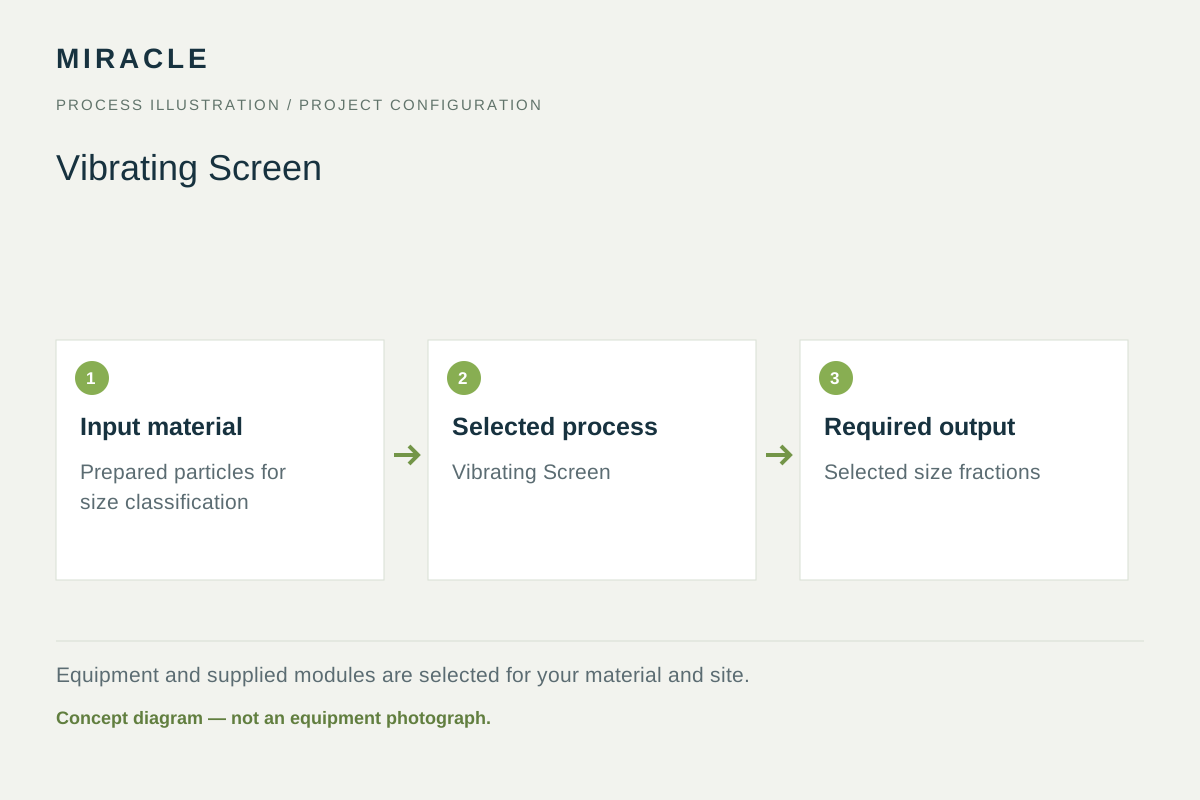
Classify by particle size
Screening divides a material stream by size rather than proving its metal composition or alloy grade. Specify the fractions needed by the next equipment or buyer, including oversize requiring another processing stage. This establishes the classification duty before selecting a screen.
Provide the material condition
Show the upstream discharge and describe particle shapes, size variation and other conditions affecting presentation. Discuss the proposed screening sections and aperture requirements against that feed. A setting used for another material should not become the default for a different stream.
Connect feeding and discharge
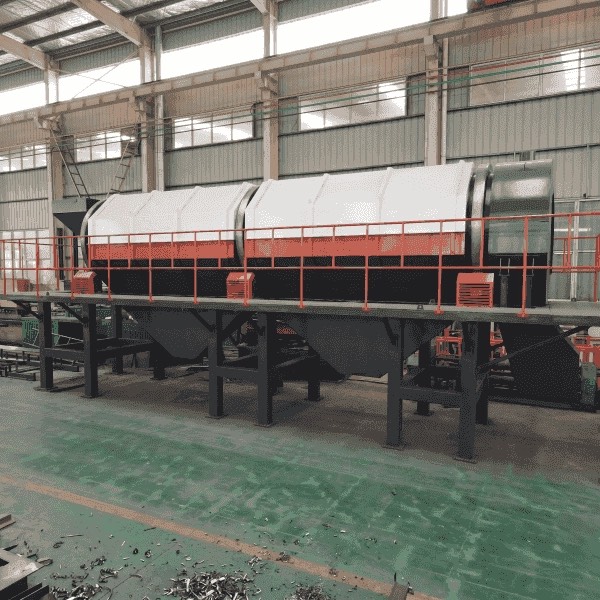
Identify how material reaches the screen and how every fraction is collected. Confirm support, transfer heights, controls and any enclosure or dust-handling interface included in the offer. Compare a vibrating arrangement and a rotary trommel on the same required classification task.
Specifications & configurations.
Tell us about your material and required configuration to discuss the relevant specifications.
Before you decide
Is a vibrating screen the same as a trommel?
They use different screening arrangements. Compare the actual material, required size cuts, feeding and installation before selecting the appropriate equipment.
Does a size fraction establish metal purity?
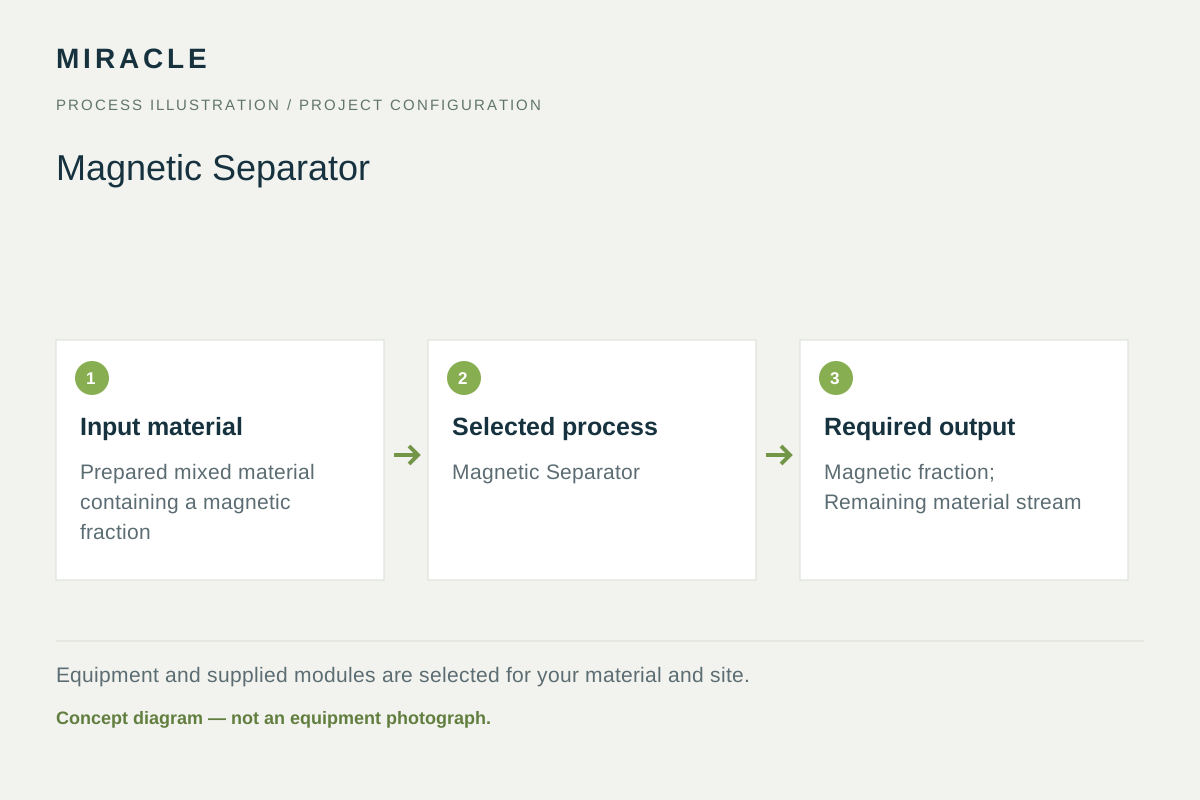
Size classification and material-type separation are different duties. Define any further sorting and composition checks needed after screening.