Understand the application.
Input materials
Output
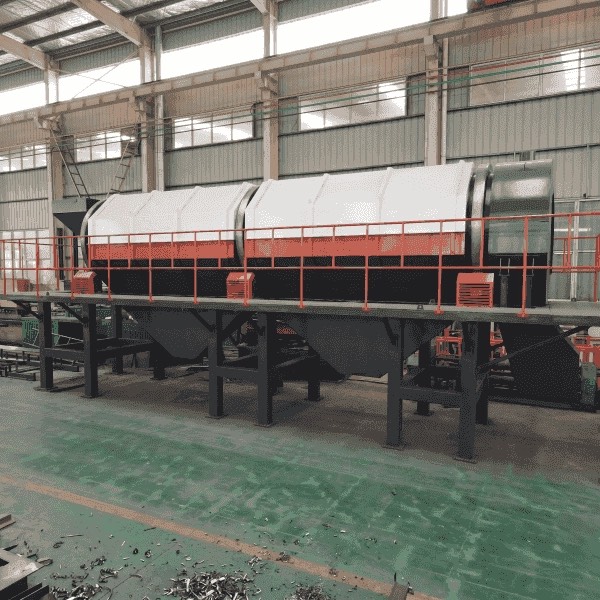
Classify material as it moves through the drum
Feed enters one end of the rotating cylindrical screen. Smaller particles pass through the apertures while larger material travels to the discharge. A dual-zone drum uses different aperture sections to produce an additional size fraction. The trommel performs size classification; it is not a substitute for separating materials by metal type.
Choose cuts around the real particle mixture
Provide the upstream crusher discharge distribution, particle shapes and the presence of damp, oily or flexible material. Aperture choice should serve the required collection streams, rather than reproduce a setting used for a different waste type. Ask how the proposed drum length, speed and inclination relate to the material being classified.
Route every fraction to a destination
Show which fraction feeds ECS or another sorter, which needs further reduction and which leaves as a collected product. The associated conveyors and collection positions affect the layout. Confirm screen panel access and the specified open or enclosed construction, including how any dust-handling interface connects to the surrounding processing line.
Specifications & configurations.
Tell us about your material and required configuration to discuss the relevant specifications.
Before you decide
Can the trommel separate aluminum from plastic directly?
Its primary task is separation by particle size. Material-type sorting belongs to the relevant downstream stages, with the feed and required fractions defined separately.
How are two or three size fractions obtained?
The standard and dual-zone arrangements use different screening layouts. Specify the desired size cuts and destinations so the appropriate drum configuration can be discussed.