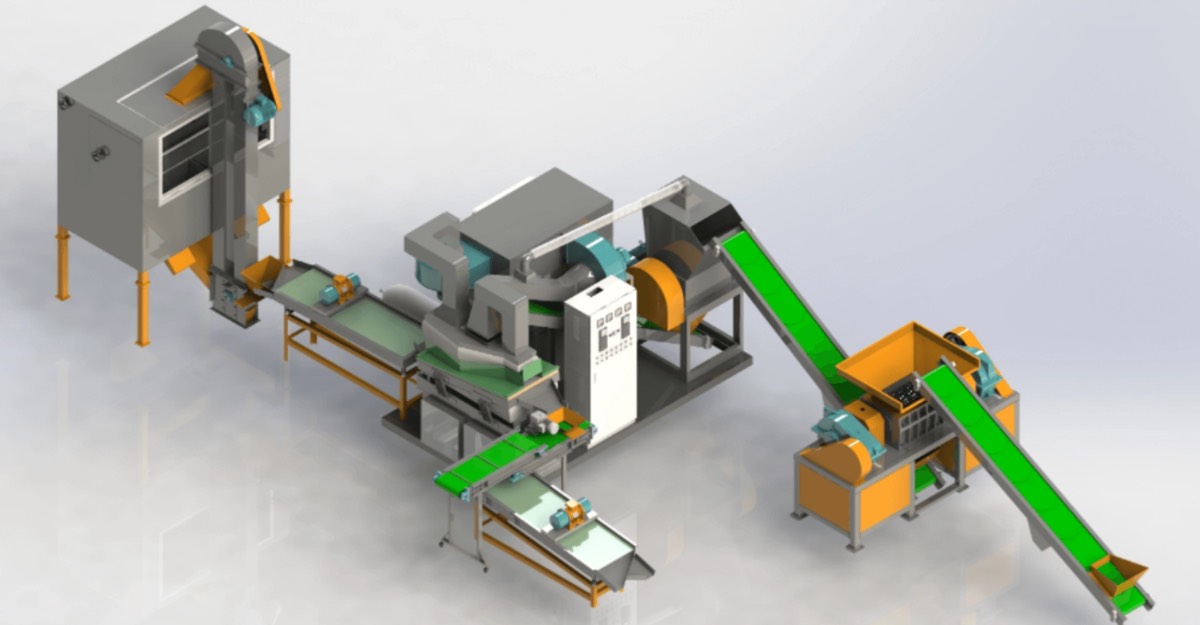
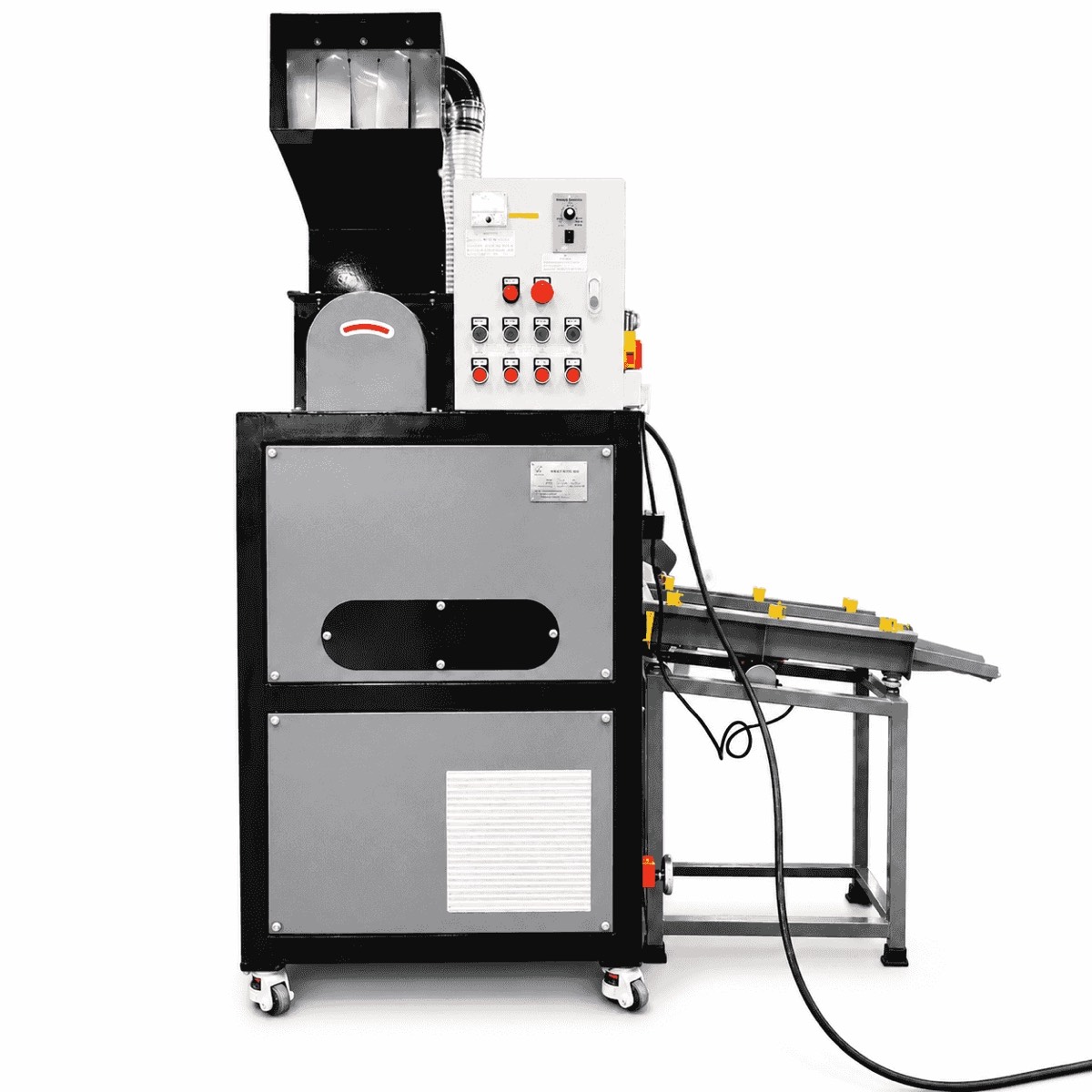
A dry processing route for separating copper-bearing scrap wire into copper granules and plastic fractions. Define the cable mix, preparation and output requirements before selecting the configuration.
Household and residential copper wiringAutomotive and motorcycle wiringAssorted copper-bearing cables, subject to feed assessment
Recovered output
Copper granulesRecycled plastic
FOLLOW THE PROCESS
A connected sequence of equipment.
01
Dry Crushing
Waste cables are crushed using a dry process.
02
Screening and Vibration Sorting
Material is screened and sorted after crushing.
03
Air Separation
Copper granules and plastic insulation are separated by air flow.
Describe the cable mix, not just its weight
Household wire, residential wiring and automotive harnesses can arrive in different lengths, diameters and conditions. Show the mix you regularly receive, including fine or tangled material. Identify plugs, terminals, steel parts and other attachments rather than describing the whole load as clean copper cable.
State whether the conductors are copper, aluminum or uncertain. This solution is presented around copper wire recovery; suitability for another conductor or an unusual insulation material should be evaluated separately. Keep difficult cable types visible instead of hiding them inside an average feed description.
Follow the dry separation route
This line combines dry crushing, screening and vibration sorting with air separation. Crushing releases conductor and insulation into smaller material; the following stages classify and separate the resulting fractions.
Confirm what preparation the proposed configuration requires and whether equipment before or after these stages is included. The complete line should be discussed through its input and output streams, rather than assuming that every machine sold as a wire granulator contains the same modules or accepts the same cable.
Check copper, plastic and remaining material
Define the copper granule specification required by your buyer and the intended destination of the plastic fraction. Discuss how mixed particles and fines will be collected and whether they need additional treatment. Both the useful product and the other fractions belong in the material assessment.
A representative trial can connect the incoming cable to the recovered products. Agree what will be sampled and weighed, and record preparation performed before the trial. Keep purity, recovery and incoming-feed throughput separate: they answer different questions and should remain tied to the tested cable and configuration.
Prepare a configuration request
Send feed photographs, diameter range, known conductor materials and the quantity you plan to process during the working period. Include your available electrical supply and any existing preparation equipment.
Ask for a quotation identifying the supplied modules, supporting equipment and expected collection streams. If you are comparing a standalone granulator with a wider line, mark their respective boundaries. The useful comparison is the work required to turn your own cable mix into products your buyers can accept.
QUESTIONS & ANSWERS
Before you decide
Is this a wet separation line?
This route uses dry crushing and air separation. Confirm the complete proposed equipment and supporting requirements for your cable mix.
Can I use the same proposal for copper and aluminum cable?
Do not assume so. Identify the conductor materials, keep mixed or uncertain feed explicit and request confirmation of the appropriate configuration and output streams.
Is the recovered copper quantity the same as the feed capacity?
No. Feed includes insulation and other material. Describe incoming throughput separately from copper output, and agree how the resulting fractions will be assessed.
Prepare a useful recycling-line inquiry with feed information, output targets, site conditions, process boundaries and clearly defined equipment modules.