Start with what happens to the pattern
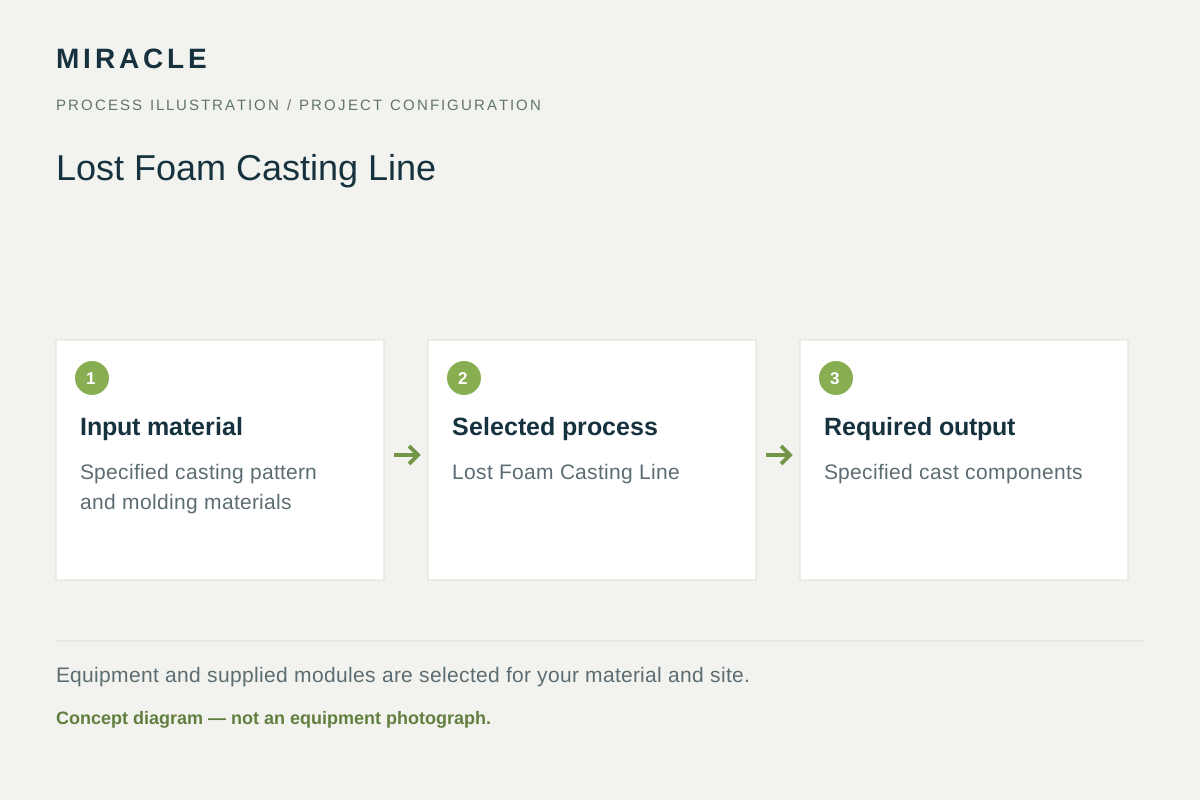
Lost foam and no-bake resin-sand molding both belong to foundry production of shaped components, but they organize the pattern and mold differently. In a conventional dry-sand lost-foam route, a coated expendable foam pattern remains within supporting unbonded sand and is consumed during metal filling. The pattern therefore forms part of the recurring production flow.
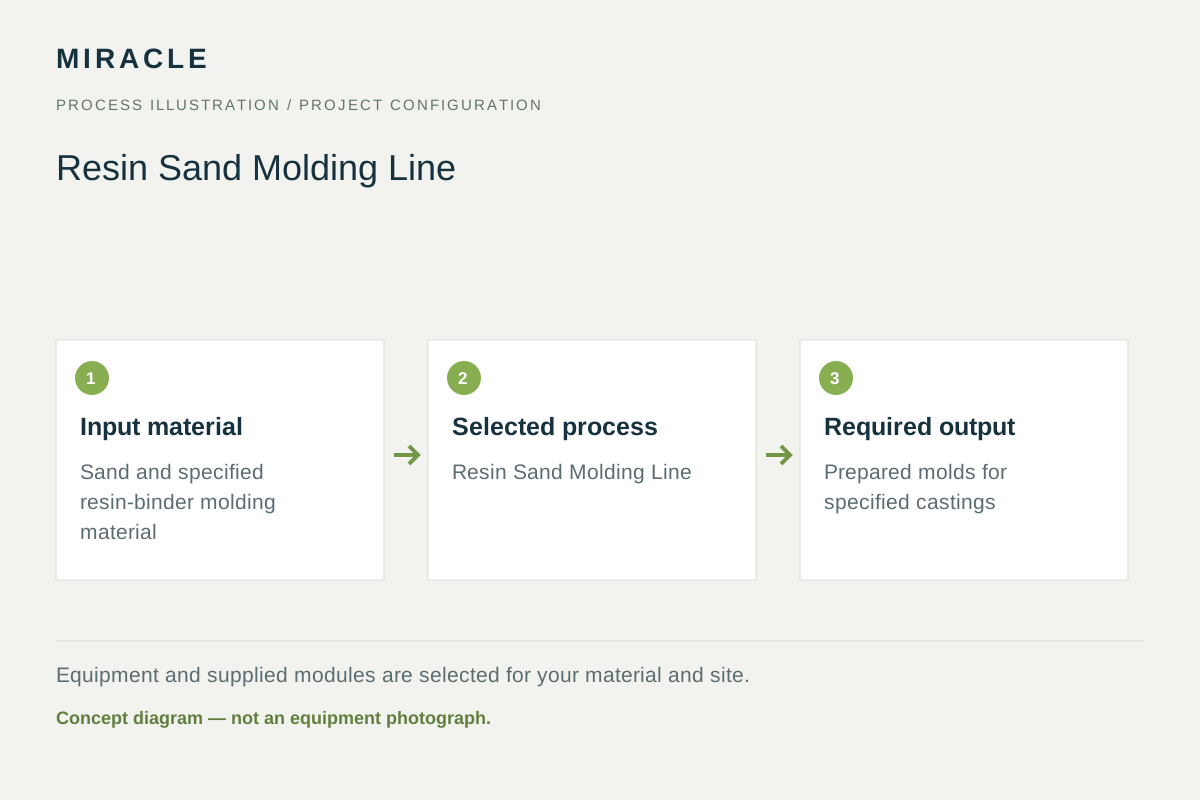
In conventional no-bake resin-sand molding, a pattern shapes a chemically bonded sand mold and is removed before pouring, leaving a cavity. The reusable pattern, mold preparation and handling arrangement create a different equipment scope. This comparison concerns those two conventional routes; it does not define every variant of sand casting.
Compare the work performed before pouring
The meaningful comparison is not simply one line price against another. Follow how each route turns its pattern and molding material into a mold ready for metal. That exposes different preparation, handling and supply requirements.
| Decision | Dry-sand lost foam | No-bake resin sand |
|---|---|---|
| Pattern role | Expendable foam pattern remains for pouring | Pattern is removed to leave the mold cavity |
| Surrounding molding medium | Unbonded sand supports the coated pattern | Sand is prepared with the specified binder system |
| Preparation to scope | Pattern production or supply, assembly and coating-related duties | Sand mixing, mold making, pattern removal and mold handling |
| Project starting point | Defined cast component and foam-pattern route | Defined cast component, tooling and bonded-sand route |
Use the casting drawing to compare practical routes
The intended part gives the comparison a common basis. Identify its metal, dimensions, internal features and receiving requirements, together with the expected production pattern. A recurring part family and frequently changing jobs create different questions about pattern supply, tooling and changeovers.
For lost foam, the supply and preparation of expendable patterns must stay connected to the line discussion. For resin sand, identify the tooling, mold arrangement and any core-making requirement. Neither process name guarantees that the chosen part geometry, dimensional target or production plan has already been solved. Compare the proposed route against the same casting drawing and acceptance requirements.
Give the resin sand mixer its own boundary
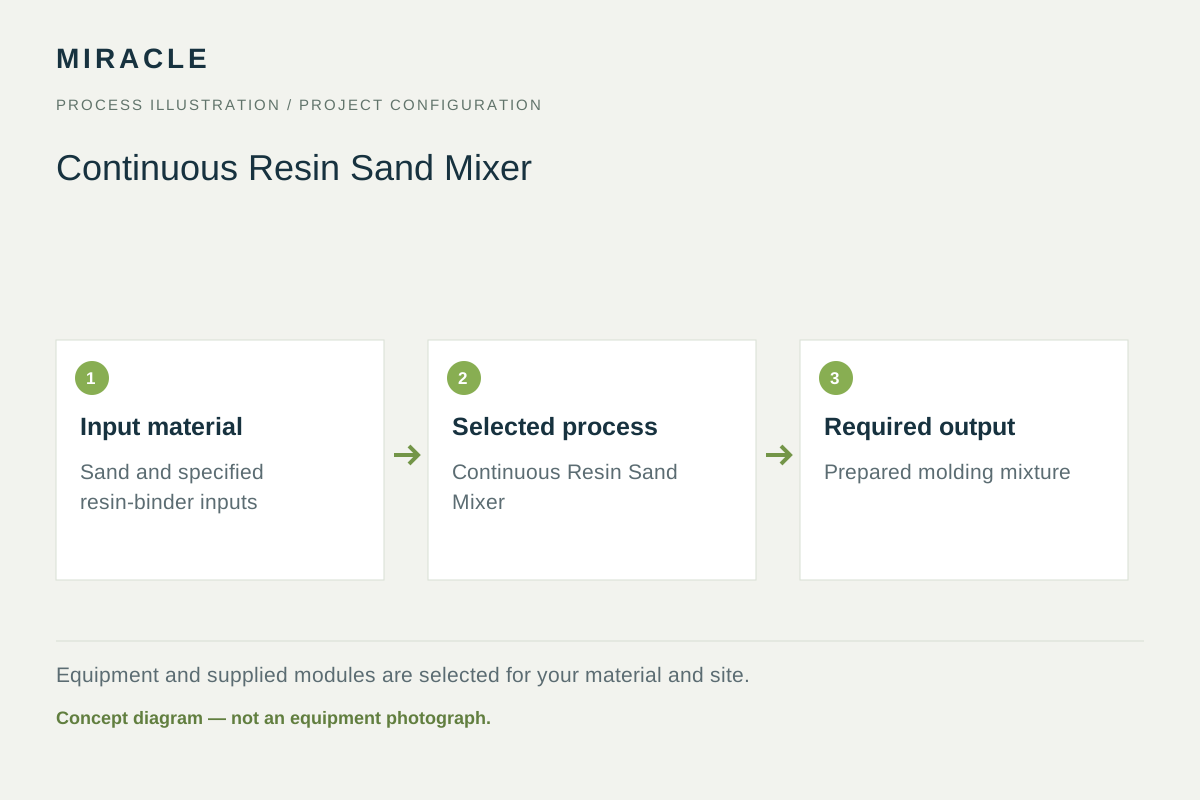
Our range distinguishes Continuous Resin Sand Mixer from Resin Sand Molding Line. The mixer prepares molding material; it does not alone produce, assemble, handle and pour the complete mold. In a no-bake project, the specified sand and binder system must be coordinated with how the receiving operation uses the prepared mixture.
The conventional dry-sand lost-foam route uses unbonded supporting sand, so a resin-sand mixer should not be treated as an interchangeable preparation module simply because both routes use sand. Define the actual molding-material system. Binder selection and mixture requirements belong to the responsible process specialist; no universal recipe follows from the machine name.
Keep metal supply and finishing visible
Mold making connects with molten-metal supply on one side and cooling, casting removal and finishing on the other. The proposal should show those interfaces even when some equipment already exists. Define material handling and the return or treatment of molding material as separate scope items.
Lost-foam casting is also different from continuous production of ingots, rods or steel billets. A continuous caster does not become a pattern-based molding line because both processes receive liquid metal. Likewise, a melting-furnace quotation does not establish which molding route will produce the required component.
Request a route-specific equipment list
A useful foundry proposal explains what enters each stage, the work performed there and what passes to the next stage. For MIRACLE inquiries, identify whether the discussion concerns a mixer, mold-making equipment or the wider casting project so that the supplied boundary can be established.
- Provide casting drawings, material and the required product checks.
- Identify expendable-pattern supply or reusable tooling and any core requirements.
- Name the intended sand system and the receiving molding operation.
- Separate preparation, molding, pouring, handling and finishing responsibilities.
- Show existing equipment and the stages to be added in the proposed layout.
Before you decide
Is lost-foam casting the same as continuous casting?
No. Lost foam is a pattern-based route for shaped cast components. Continuous casting equipment addresses a different product and material-handling route, such as ingots or billets.
Can buying a resin sand mixer establish a complete molding line?
The mixer addresses material preparation. Mold making, handling, pouring interfaces and later casting treatment require their own defined equipment scope.
Which route is always the better purchase?
There is no universal choice from the process names alone. Compare the same component, pattern or tooling requirements, production plan and complete supplied scope.
Equipment references
Product information for the equipment discussed in this guide.