Start with the board that enters the equipment
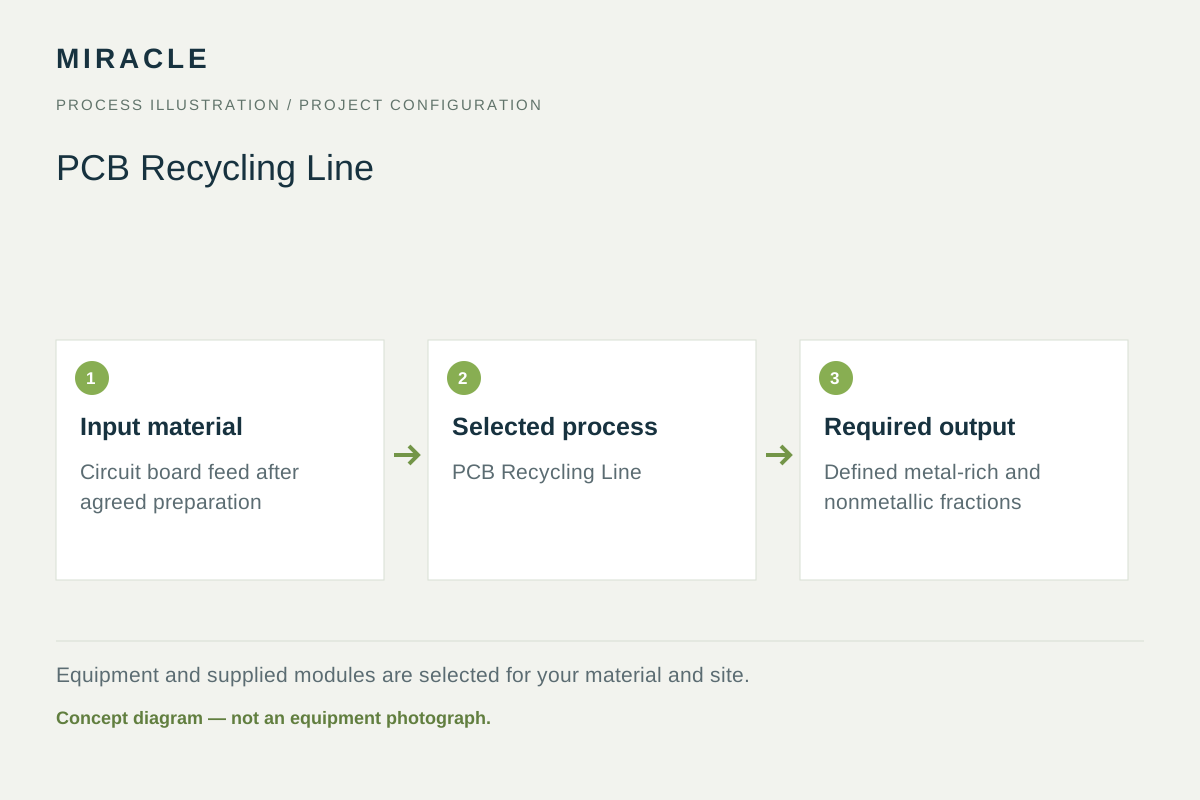
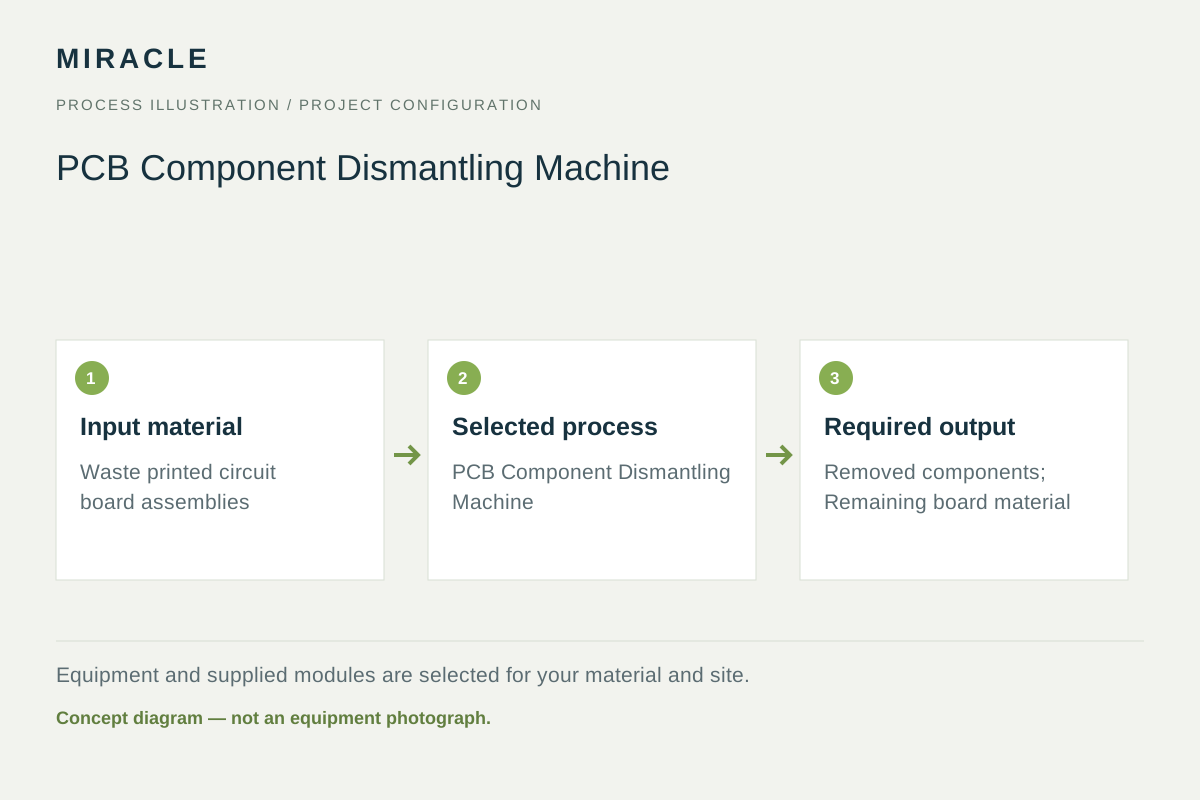
A populated circuit board and board material after component removal are different feeds. A PCB dismantling machine addresses mounted components, while a PCB recycling line must define the subsequent material-treatment and recovery duties it is intended to perform. The term PCB recycling alone does not identify the starting point.
Photograph representative boards and difficult assemblies. Show remaining housings, connectors and other attachments, and describe preparation already performed. If the site receives both populated and prepared boards, keep those streams separate when discussing the equipment needed.
Give each stage a job and an output
Component dismantling, material size reduction and separation do not deliver the same result. MIRACLE’s component-removal direction concerns parts mounted on the board. Its PCB recycling project direction requires an agreed feed condition, module list and recovered fractions. One does not automatically include the complete scope of the other.
Use a simple task map to identify which equipment is required and where it hands material onward. If the project also has a precious-metal objective, explain that separately rather than treating a mechanical equipment name as a refining specification.
| Task | Result to define | Boundary to confirm |
|---|---|---|
| Component dismantling | Removed parts and remaining board material | Accepted assemblies and handling of each fraction |
| Board-material processing | Material prepared for recovery stages | Preparation, reduction and transfer modules |
| Material separation | Specified metal-rich and nonmetallic streams | Feed condition and output assessment |
| Additional refining objective | A separately defined product requirement | Required process and specialist responsibilities |
Decide whether components need to remain identifiable
Some projects focus on removing components before board material is processed further. Others need particular parts kept identifiable during collection. State which result is wanted. A dismantling demonstration does not by itself establish component functionality or suitability for reuse.
Describe the board construction and the range of mounted items, including assemblies that may require separate handling. Ask the proposed equipment to identify accepted feed, any preparation and the form of removed components. Avoid assuming that one dismantling arrangement handles every board and attachment in the same way.
Define the recovered material instead of saying pure metal
For a material-recovery project, identify the fractions the next buyer or process needs. A metal-rich fraction and an individually refined metal are different products. State the required composition and physical form, together with the method by which they will be evaluated.
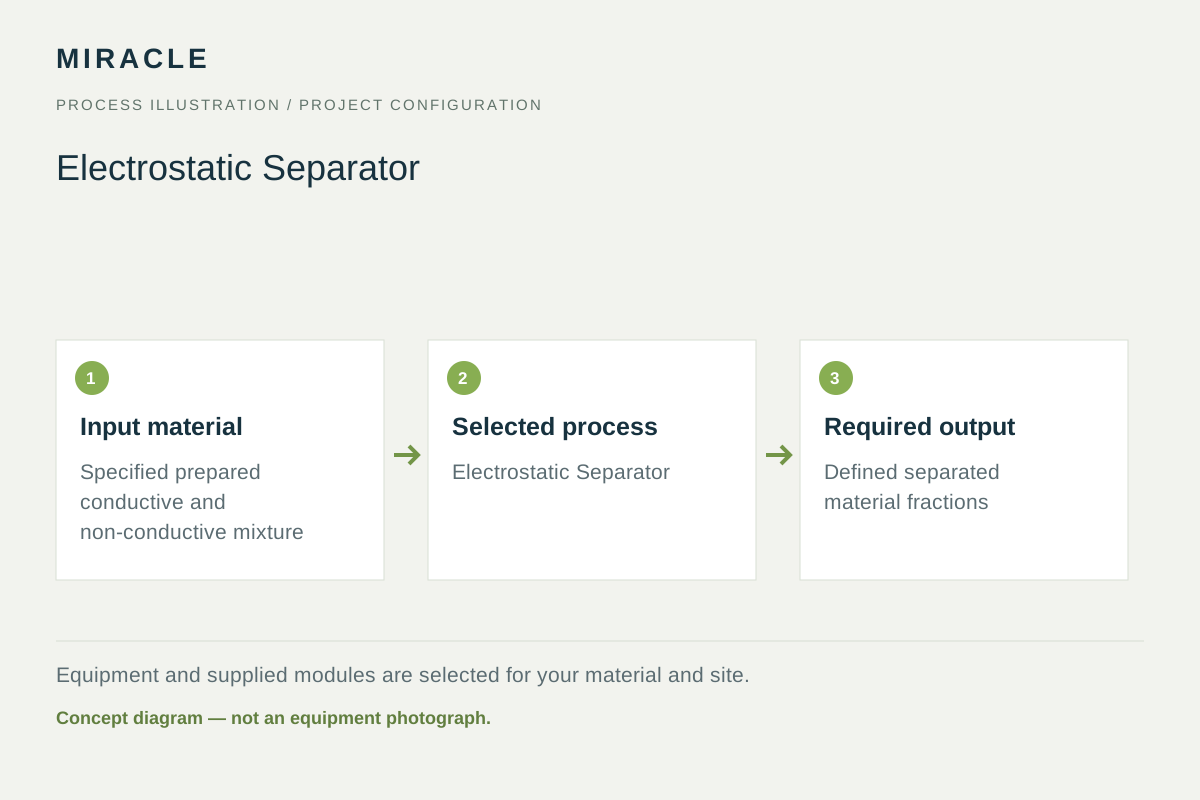
Ask what remains in the other outputs and which material requires another treatment stage. An electrostatic separator is a possible equipment direction for a defined prepared mixture, not evidence that every PCB stream has the same configuration. Its position and purpose should be explained against the material reaching it.
Specify the interfaces between dismantling and the line
If dismantling occurs before another line, define the condition and handling of the remaining board material. The receiving equipment may have its own feed requirements. Identify collection, storage and transfer responsibilities instead of assuming that two independently selected machines form a complete connected system.
For an existing installation, show which modules remain and where the new equipment will connect. Confirm controls, utilities, supporting equipment and site work within the proposal. A process illustration should be accompanied by a supplied-equipment list and a clear description of excluded duties.
Choose a purchase boundary for the actual project
If the required task ends at component removal, specify the dismantling outputs and their destinations. If prepared board material is the incoming feed, focus on the material-recovery package. If both duties are required, ask the proposal to show how they connect and how each output is assessed.
Compare offers using the same board case and desired fractions. This prevents one quotation for a pretreatment station being compared with another for a broader project. Keep unknown configuration details open for discussion rather than filling the gap with figures from unrelated equipment.
- Identify populated and prepared board streams separately.
- State whether component identity must be preserved.
- Define every recovered and residual fraction.
- Confirm supplied modules and the handovers between them.
Before you decide
Does a PCB dismantling machine produce refined precious metals?
No. It addresses removal of mounted components. Further board-material recovery and any refining objective require separately defined processes and equipment scopes.
Is component removal automatically included in a PCB recycling line?
Confirm the accepted board condition and module list. Dismantling may already have been performed, be separately supplied or form part of an agreed connected package.
Can a removed component be described as reusable?
Dismantling alone does not establish functionality. Specify any required identification and assessment separately from the mechanical removal task.
Equipment references
Product information for the equipment discussed in this guide.