Name the result you need after the first station
A solar panel frame removing machine and a glass-removal machine address different parts of a panel-processing project. A request for a complete recycling line goes further: it must define the material received, the stages supplied and the fractions collected at the end.
Begin by describing the result needed from the proposed equipment. Do you need a removed frame and a remaining panel assembly, a defined glass fraction, or several recovered material streams? Those are different handovers, even when a supplier discusses the equipment together.
Separate the duties before comparing configurations
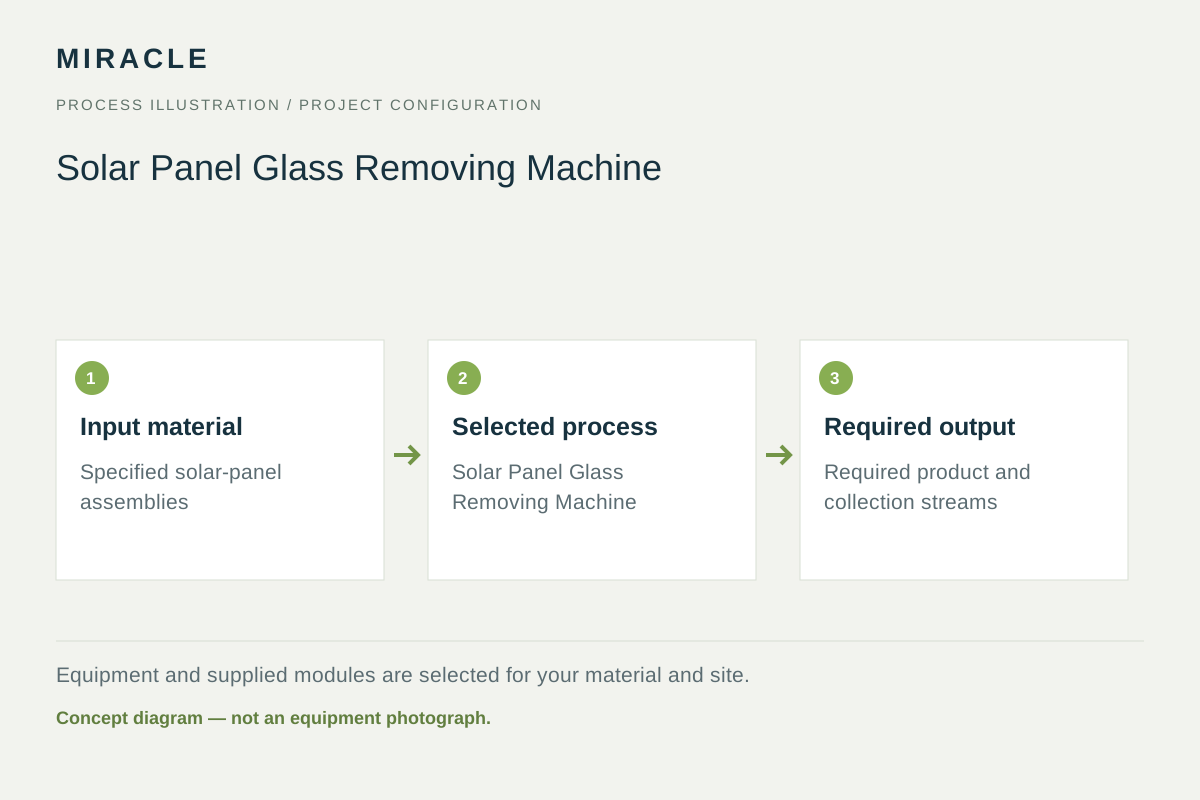
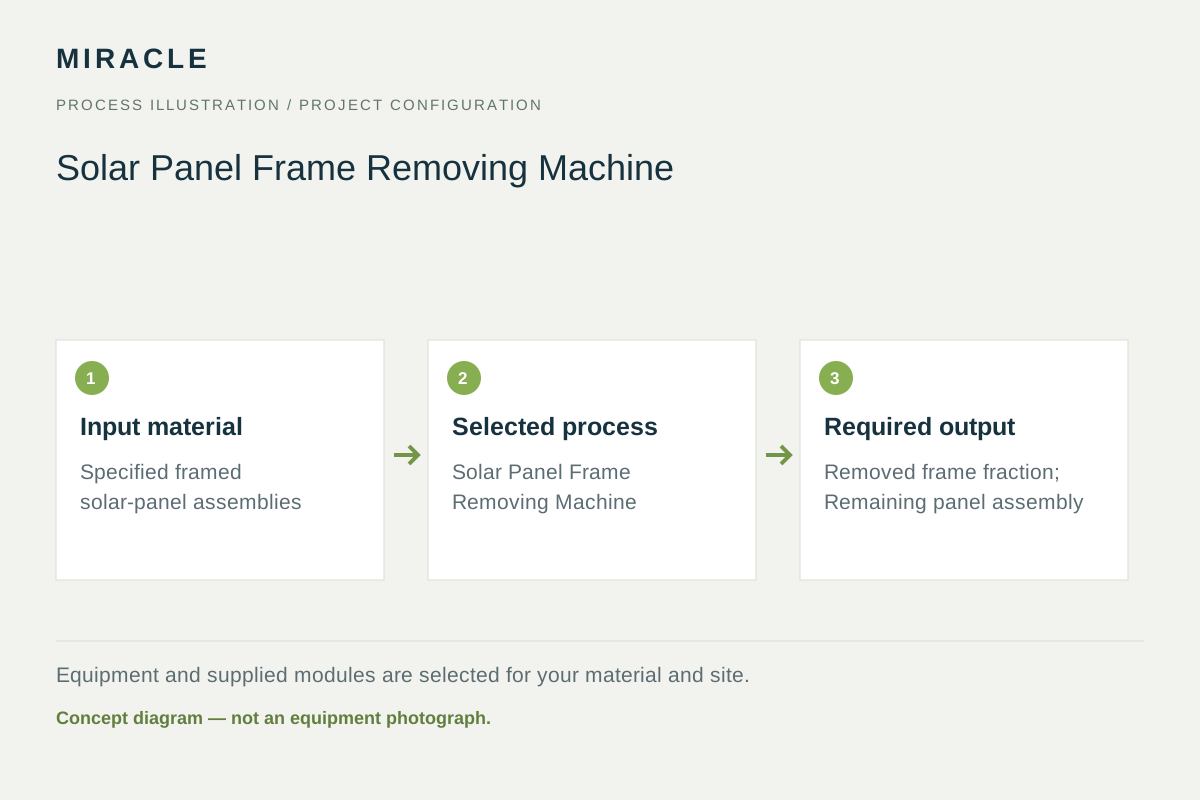
Frame removal concerns the external frame and its connection with the panel. Glass removal concerns the glass and remaining assembly. Further recovery of other materials is another process scope. The proposal should explain which task each station performs and what condition its output must have for the next stage.
MIRACLE’s range includes frame-removal, glass-removal and solar-panel recycling project directions. Their relationship should be confirmed for the selected panel construction. An individual module name does not establish that every dismantling and recovery task is included.
| Equipment direction | Handover to define | Scope question |
|---|---|---|
| Frame removal | Removed frame and remaining assembly | Which attachments and panel forms are accepted? |
| Glass removal | Required glass fraction and remaining material | What method and incoming preparation are proposed? |
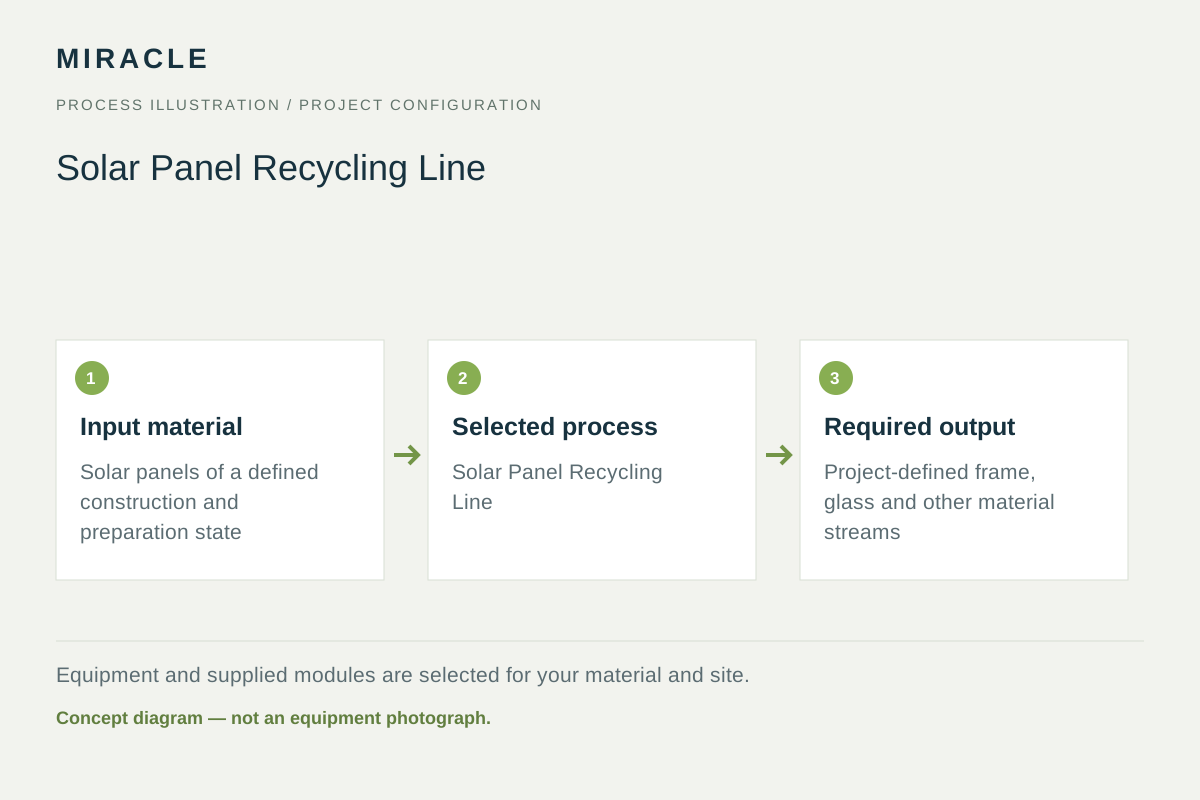
| Complete recycling project | Specified recovered streams | Which modules, transfers and collection duties are supplied? |
Describe construction and preparation, not just dimensions
Panel dimensions matter, but they do not describe the whole feed. Provide construction information where available, including the glass arrangement, frame, remaining attachments and the condition of the assembly. Representative damaged material should remain visible alongside normal panels rather than being omitted from the description.
Explain the preparation already completed and the condition at the proposed station entrance. If another machine removes frames first, identify its output and handling arrangement. If a station is described as combining functions, ask exactly which functions and feed conditions the proposed configuration covers.
Specify the form of the glass output
Glass removal can be discussed around different receiving requirements. State whether the next process needs a particular physical form or whether the material will be collected for further treatment. Ask the proposed equipment to identify what separates and what remains with other panel material.
Keep output form and composition as separate requirements. A visible glass fraction does not establish a purity level or suitability for an unspecified buyer. Agree how the glass and remaining material will be evaluated for the stated panel construction, including the fractions that need additional treatment.
Draw the boundary around the complete package
For a connected project, identify feeding, each selected treatment station, transfers and collection. State which equipment is already installed and where the new package begins and ends. Supporting controls, utilities and site connections also need named responsibilities rather than being assumed from a process illustration.
The decision may be to buy one station now and connect another later. In that case, describe the intended future handover as well as the current one. This helps establish what information and interfaces must be retained without claiming that a partial installation is already a complete recovery line.
Use the same panel case when reviewing offers
Prepare a panel case with photographs, construction information, dimensions, incoming condition and the outputs required. Use that same case when comparing a frame station, glass station or connected line. Otherwise, apparently different equipment offers may be based on different assumptions about the material and preparation.
Ask each proposal to show the accepted feed, function of each module, collected streams and the equipment not included. Review those answers before comparing headline capacity or price. A useful selection connects the actual panel to a defined material result at every handover.
- Identify the panel construction and remaining attachments.
- Describe preparation already completed.
- Define frame, glass and other streams separately.
- Confirm combined functions and excluded stages.
Before you decide
Does a frame-removing machine also produce all recovered panel materials?
Frame removal is one duty. Glass treatment and further material recovery need their own defined stages and outputs within the proposed project.
Can glass-removal equipment be selected using panel dimensions alone?
Construction, incoming condition, preparation and the required output also matter. Confirm the proposed method and feed limits for that panel case.
What if one machine is advertised with frame and glass functions?
Ask which functions the proposed station actually supplies, the accepted panel condition and the handover to subsequent processing. Do not infer the full package from its title.
Equipment references
Product information for the equipment discussed in this guide.