Understand the application.
Input materials
Separate through particle trajectories
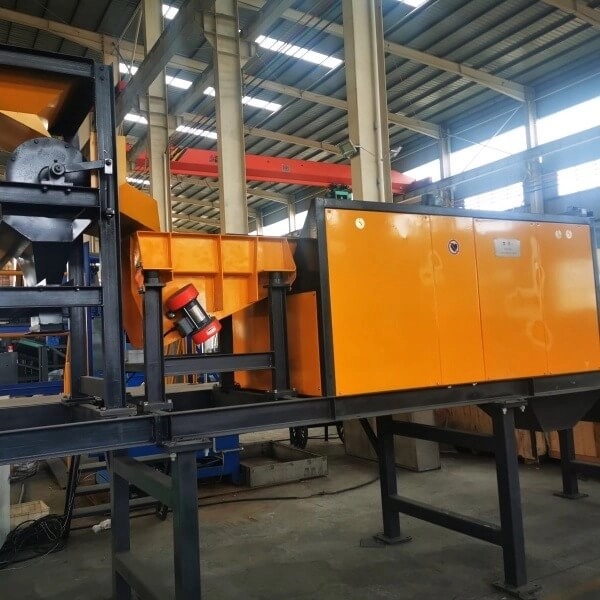
As conductive nonferrous particles pass the magnetic rotor, induced currents produce a repulsive effect. Their discharge path differs from that of nonconductive material, and a splitter divides the streams. This explains the machine’s role: sorting prepared particles rather than crushing assemblies or establishing the alloy identity of the collected metal.
Present a defined feed to the belt
Describe particle size distribution, shapes, moisture, surface contamination and the proportion of mixed material. A feed dominated by flat can fragments differs from compact granules. Confirm any prior screening and ferrous removal included in the process, so the separator is assessed on the material it will actually receive rather than the unsorted incoming load.
Coordinate belt, rotor and collection
Belt width, belt speed, rotor operation and splitter position belong to one sorting setup. Ask how the proposed arrangement relates to your feed and target fractions. Define the receiving bins or conveyors and how both streams will be checked. A quoted separation result should remain attached to the material and configuration used to establish it.
Specifications & configurations.
Tell us about your material and required configuration to discuss the relevant specifications.
Before you decide
Does ECS replace a magnetic iron-removal stage?
The two stages perform different tasks. Define ferrous removal and nonferrous sorting separately in the process proposal, including their positions and collection streams.
Will it produce separate pure aluminum and copper products?
Do not infer that from nonferrous recovery. State the required products and ask which additional identification or separation is needed for the particular mixture.