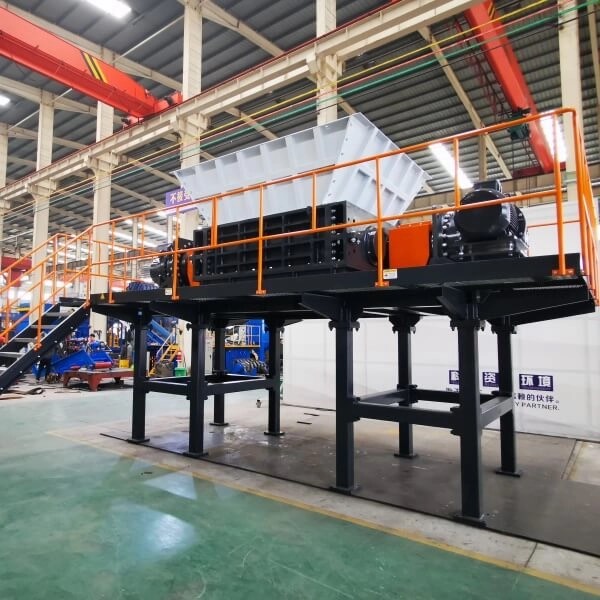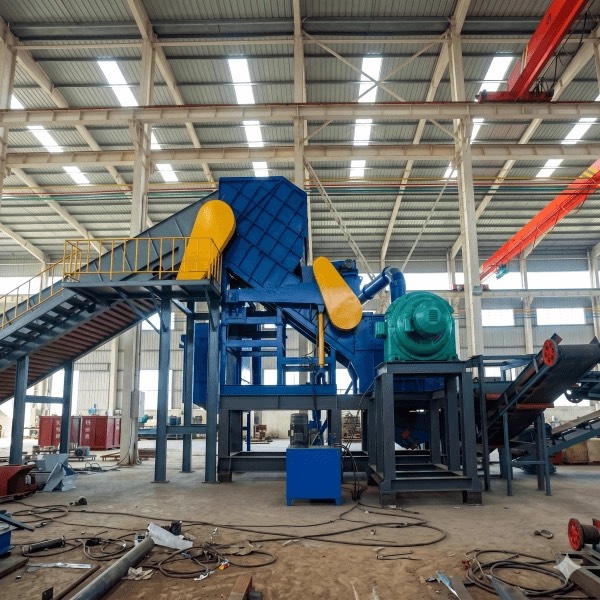
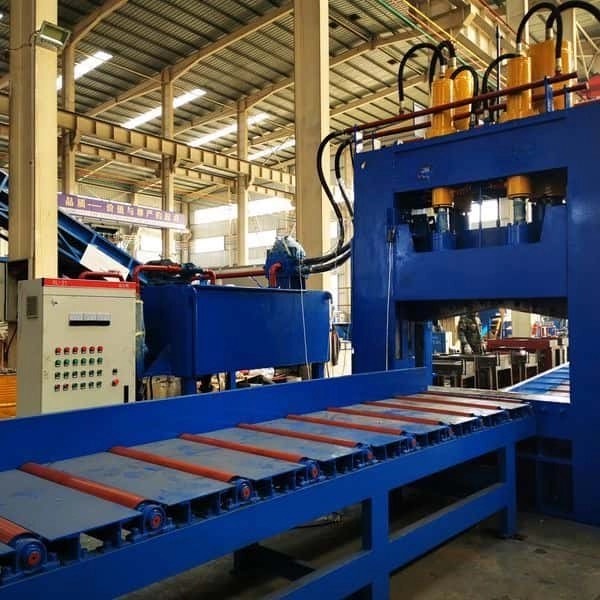
Understand the application.
Cut sections rather than create a shredded fraction
The hydraulic system drives the upper blade through material presented against the lower blade. This gives the gantry shear a different task from a shredder: making cuts in scrap sections instead of repeatedly breaking a mixed load into fragments. Define the piece lengths and material form needed by the receiving operation.
Read cutting limits with the section geometry
Plate thickness, round-bar diameter and beam height describe different geometries. A limit stated for one should not be transferred to another shape or grade. Provide drawings or photographs with dimensions and identify the steel where known. Confirm how orientation, positioning and the required cut relate to the offered machine configuration.
Include positioning and discharge in the layout
The complete work area includes bringing scrap to the blade, holding it during cutting and removing cut pieces. Confirm the offered clamp and control arrangement, including whether the holding clamp is part of the supplied machine or a separate configuration item. Plan access for blade work and identify hydraulic power and site responsibilities.
Specifications & configurations.
Tell us about your material and required configuration to discuss the relevant specifications.
Before you decide
Can one maximum thickness be used for every steel profile?
No. Present the particular shape, dimensions and material. Cutting limits for plate, bar and beam sections need to be considered in their own context.
Is the holding clamp included in every offer?
Confirm it expressly in the equipment list and operating arrangement. It should not be assumed from a general description of the shear or its working principle.