Understand the application.
Input materials
Output
Engage bulky material with hooked blades
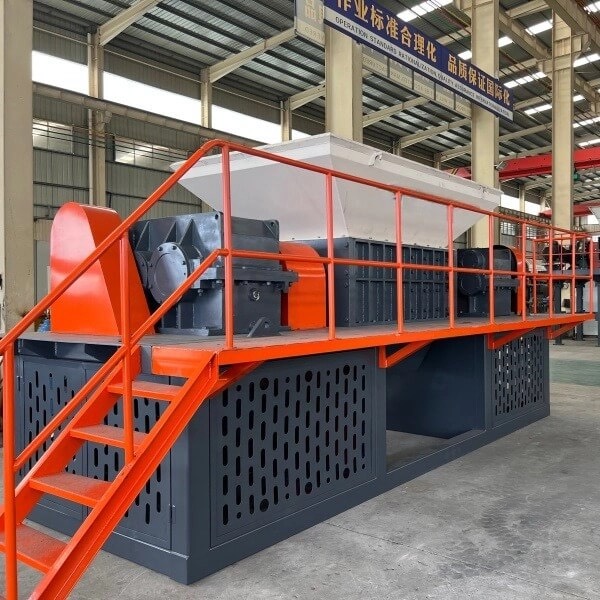
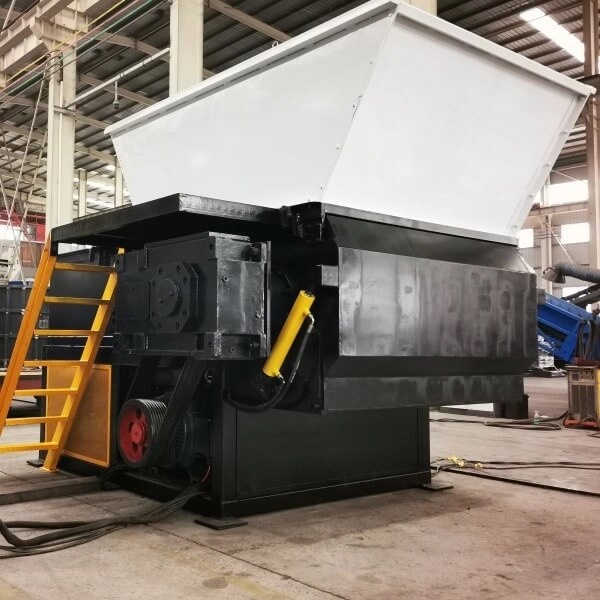
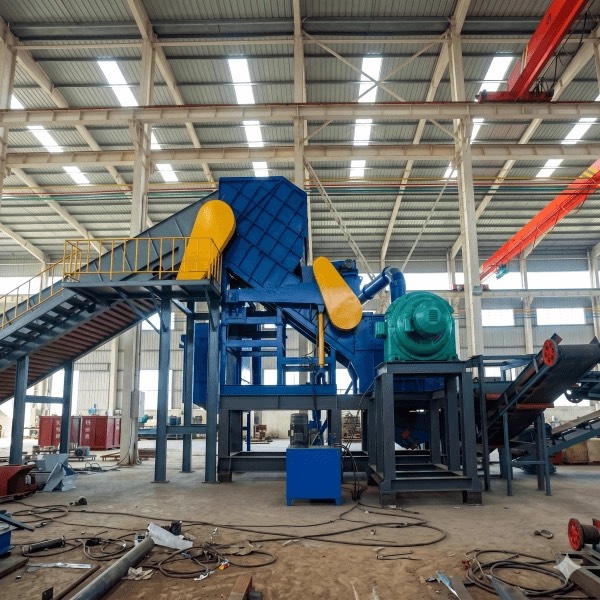
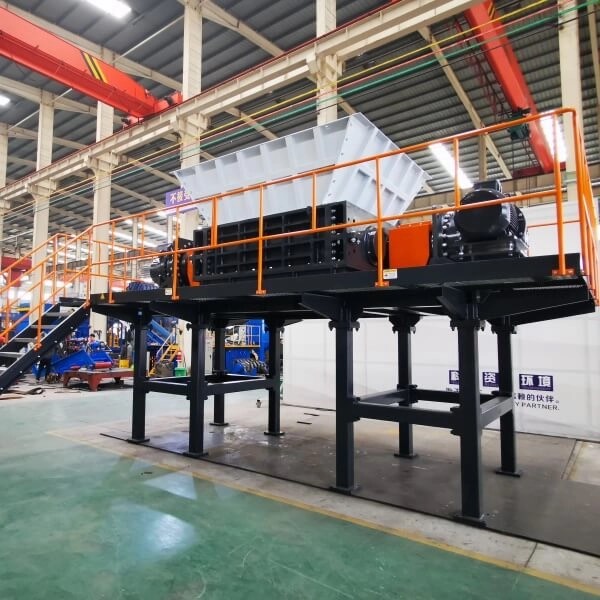
The DS7272 combines counter-rotating shafts and hook-type blades to pull and tear bulky scrap. This is a different reduction approach from a hammer-impact crusher. Use photographs of representative structures and assemblies to discuss how material will engage the shafts, rather than selecting only from an overall feed opening dimension.
Define accepted assemblies and preparation
Describe metal types, section geometry and attached components. A large hopper does not by itself confirm that any complete industrial assembly is suitable. Identify the most difficult regular pieces and ask which require preparation. The stated throughput varies with material, so retain the feed description alongside any production target or performance discussion.
Plan the coarse reduction interface
Confirm whether the discharge will go to a second crusher, screening, sorting or another handling stage. Match the required piece form and transfer arrangement to that next operation. The hydraulic pusher is an optional item in the machine information; identify whether it belongs in your setup and include both drives and auxiliaries in utility planning.
Specifications & configurations.
Tell us about your material and required configuration to discuss the relevant specifications.
Before you decide
Is a hydraulic pusher always included?
Treat it as a configuration item to confirm. State how bulky material will be loaded and ask whether the proposed feed arrangement uses the optional pusher.
Does a large feed opening remove all preparation work?
No unrestricted feed acceptance should be inferred. Confirm the geometry, material and attached components of the assemblies proposed for processing.