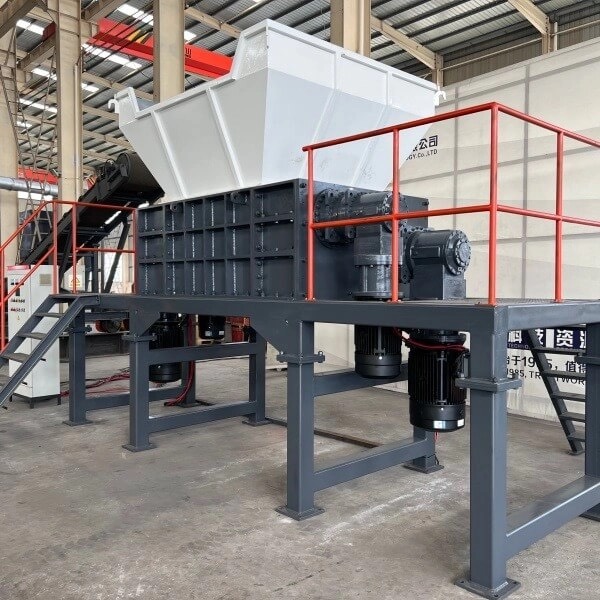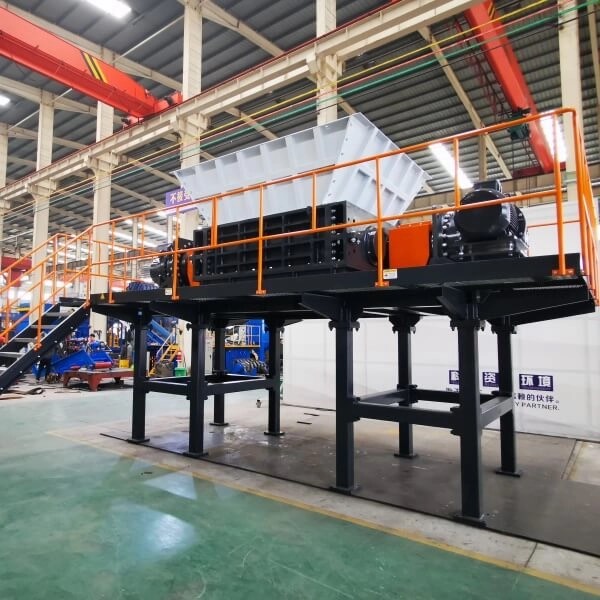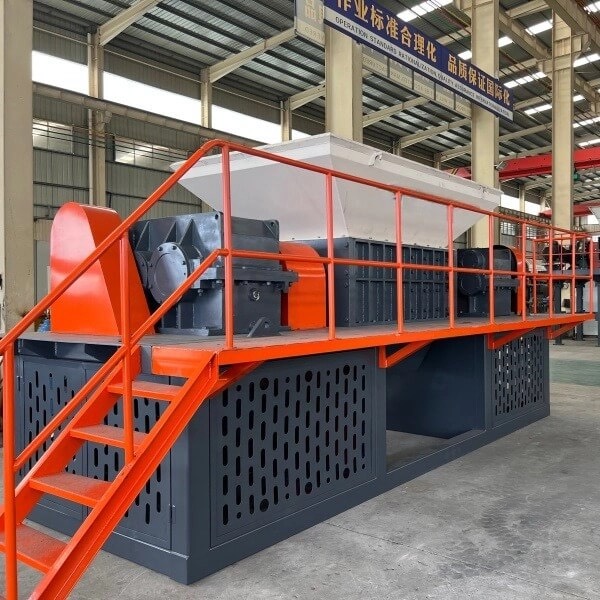
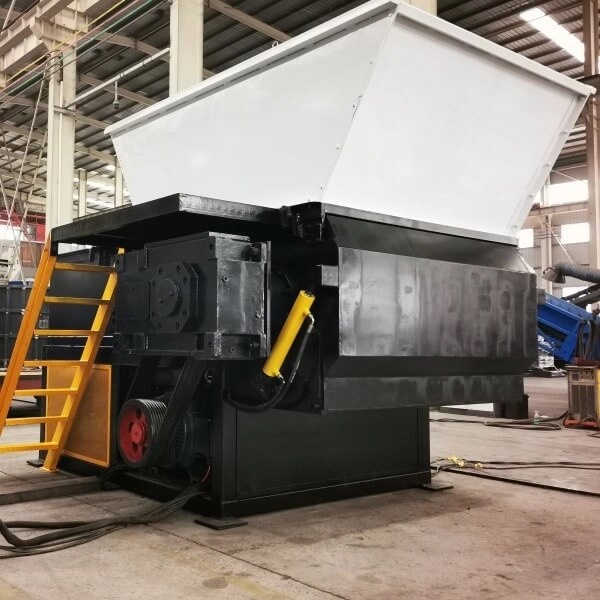
Understand the application.
Input materials
Output
Feed material into a screened cutting zone
The hydraulic pusher moves material toward a cutting rotor working with fixed counter knives. Material is reduced in a chamber with a screen beneath the rotor. This makes the screen and pusher part of the machine’s working approach, rather than independent downstream items to assume will be supplied with every other shredder type.
Describe composite and flexible feed carefully
Plastic-steel profiles, light metals and industrial film differ in rigidity, shape and attachments. State which forms dominate the load and whether batches remain separated. Show long frame sections or flexible material in the condition received. Confirm the accepted geometry and preparation instead of relying only on the overall hopper opening or a broad waste category.
Coordinate the screen with the next operation
Define the output required by sorting, granulation or other receiving equipment. Compare screen selection with the material and production target rather than treating one aperture as suitable for every feed. Ask how screen access, cleaning during material changeovers and individually replaceable knives fit the layout, and identify surrounding feed and discharge conveyors separately.
Specifications & configurations.
Tell us about your material and required configuration to discuss the relevant specifications.
Before you decide
What makes the hydraulic pusher relevant?
It presents material to the single cutting rotor. Describe the feed form so the proposed pusher and chamber arrangement can be evaluated for the actual load.
How should I compare single-shaft and dual-shaft equipment?
Compare cutting approach, screen provision, feed engagement and required output on the same material. The number of shafts alone does not define the complete processing result.